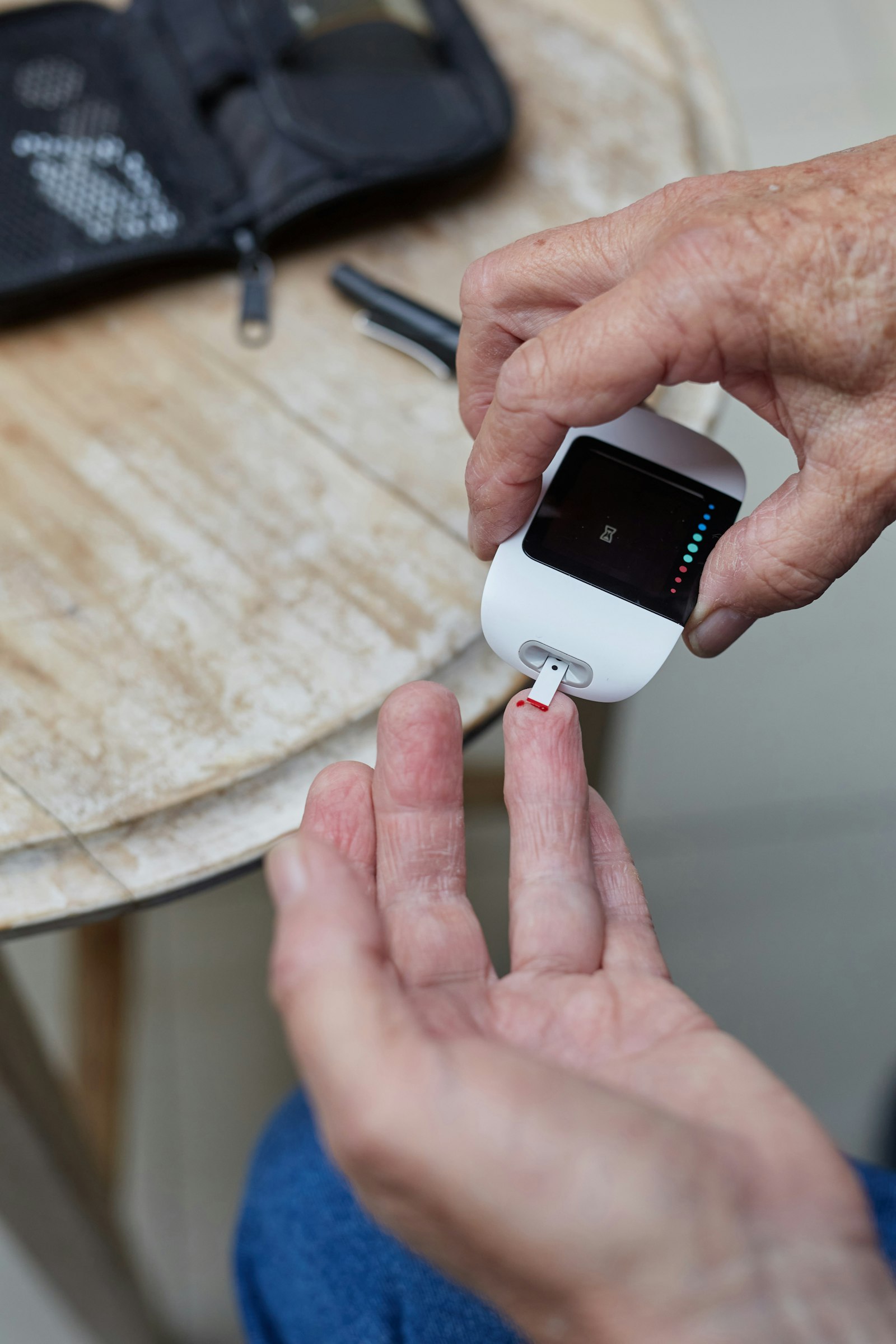
The Unique Challenge of Type 1 Disability Claims
Type 1 diabetes is often called an invisible illness — and that invisibility is the first hurdle in a disability claim. People with Type 1 frequently look healthy. They show up to appointments on time, manage to hold conversations, and can describe their own condition fluently. None of that reflects what living with Type 1 actually requires, and none of it appears on a lab report.
The real disability lives in the 24/7 management burden. Every meal becomes a math problem — counting carbohydrates, estimating fat and protein impact, dialing in an insulin dose, and then second-guessing it for the next four hours. Overnight monitoring interrupts sleep. Pump sites and sensors fail at unpredictable times. The mental load of being your own pancreas never turns off, even when you do.
And despite perfect compliance — a meticulously dosed bolus, a measured meal, a stable routine — blood sugars still swing. Stress, illness, hormones, ambient temperature, the timing of an injection site, and dozens of other variables can push glucose in directions no algorithm can fully predict. Adjudicators who don't live with the disease often interpret these swings as non-compliance instead of seeing them for what they are: the inherent unpredictability of an autoimmune condition.
SSA judges and disability insurers routinely underestimate this cognitive load. They look for clean labs and a clear pattern of failure. Type 1 rarely fits that mold. A winning claim has to translate the daily grind — the alarms, the calculations, the recovery time after lows, the lost sleep — into language the SSA understands.
Complications That Hit Type 1 Hardest
Because diabetes is no longer a standalone listing, every Type 1 claim is built around the complications it causes. A handful of these complications appear disproportionately in Type 1 cases — and each one maps to a different section of the Blue Book.
Hypoglycemia Unawareness
Loss of the warning symptoms — shakiness, sweating, racing heart — that normally signal a low. Without those cues, glucose can drop into seizure or loss-of-consciousness range with no warning. Evaluated under Section 11.00 (Neurological — seizures) or through an RFC that accounts for sudden, unpredictable incapacitation.
Read the full guideRecurrent DKA
Acute episodes of diabetic ketoacidosis requiring emergency department visits or hospitalization. DKA itself isn't a listing, but the downstream complications are: cardiac arrhythmias (4.00), cerebral edema and post-event seizures (11.00), and intestinal necrosis (5.00) all become qualifying conditions when documented.
Read the full guideAutonomic Neuropathy
Nerve damage that disrupts the involuntary systems — digestion (gastroparesis), blood pressure regulation (orthostatic hypotension), resting heart rate, and bladder function. Evaluated under Section 11.00 (Neurological) with crossover to digestive (5.00) and cardiovascular (4.00) listings.
Read the full guideDepression & Diabetes Burnout
The psychological weight of relentless self-management — diabetes distress, depression, and anxiety — is documented at rates two to three times higher than the general population. Evaluated under Section 12.04 (Depressive disorders) or 12.06 (Anxiety disorders) using specialist mental health records.
Read the full guideEvidence Strategies for Type 1
The evidence that wins a Type 1 claim doesn't look like a Type 2 evidence file. Where Type 2 cases lean on accumulated end-organ damage, Type 1 cases turn on continuous data — what your blood sugar is doing minute to minute, how often you're dropping into dangerous territory, and how much of your day is consumed by managing it. Snapshot labs miss almost all of that.
- CGM data: Time-in-range percentages, time below range, frequency of Level 2 hypoglycemia (<54 mg/dL), and overnight lows. Ninety days of continuous glucose monitor downloads is gold-standard evidence — it shows the pattern that A1C can never capture.
- Insulin pump records: Bolus history, basal patterns, suspended deliveries, and site changes. These records show the actual daily burden of managing the disease and document how many times each day you intervene to keep yourself safe.
- Hypoglycemia log: A documented record of episodes — date, time, glucose level, treatment given, recovery time, and third-party witnesses where relevant. This is especially important for hypoglycemia unawareness claims.
- Endocrinologist records: Specialist notes describing your specific pattern of disease, treatment changes over time, and prognosis. Primary care notes alone rarely carry a Type 1 claim.
- Daily management burden documentation: A symptom diary that captures the cognitive load — interruptions, alarms, calculation, anxiety, sleep loss. This is the evidence that bridges the gap between lab numbers and functional limitation.
- Hospitalization records for DKA episodes: Each admission documented with arterial pH, bicarbonate, glucose at admission, and length of stay. The pattern across multiple admissions is what matters most.
Pro tip: Ask your endocrinologist for a Medical Source Statement that explicitly addresses the cognitive and time burden of Type 1 management — not just A1C. Most physicians don't volunteer this language unless you ask. A statement that quantifies how many hours per day you spend on self-management, and how often that management interrupts work tasks, is far more persuasive than a generic letter of support.
Type 1 FAQ
I have a good A1C. Does that hurt my claim?
No, but it doesn't help on its own. A1C is a 90-day average that hides the dangerous lows and unpredictable swings that actually disable T1D patients. The SSA looks at functional limitations and time spent at dangerous levels, not just the average. A "good" A1C achieved through frequent hypoglycemia is in some ways more concerning than a slightly elevated one.
I use an insulin pump and CGM. Doesn't that mean my diabetes is well-controlled?
Insulin pumps and CGMs are management tools — they don't cure diabetes. Using them is evidence of how much daily work you put into managing the disease. Your CGM data itself, especially time below 54 mg/dL, is some of the strongest evidence you have. The tools document the disease, they don't dismiss it.
I was diagnosed as a child. Does that matter for adult disability claims?
Yes, in a few ways. Long disease duration increases the likelihood of complications — neuropathy, retinopathy, and nephropathy all correlate with years of disease exposure. Those become qualifying conditions in their own right. It also documents that the disease isn't going away or being well-managed despite decades of trying, which speaks directly to the SSA's expectation that treatment should eventually restore function.
I'm still working part-time. Can I still apply?
Potentially. The SSA's Substantial Gainful Activity (SGA) threshold for 2026 is $1,620 per month. If you're earning below that — including because you've had to cut back hours due to your Type 1 — you clear the first step of the evaluation. Reduced hours documented as a direct result of your diabetes is often useful evidence of functional limitation.