
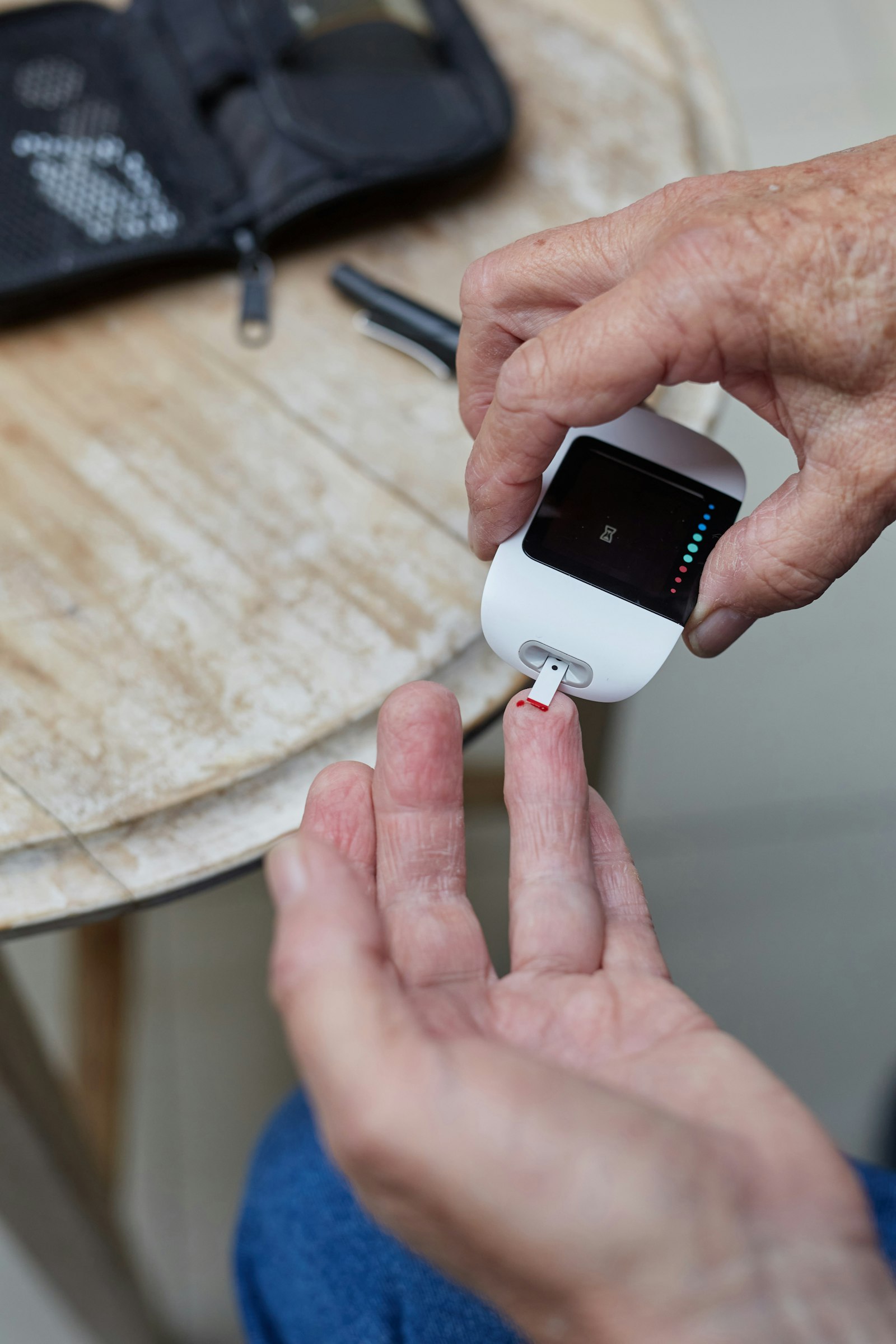
What Is Hypoglycemia Unawareness?
Hypoglycemia unawareness is a condition where the body loses its ability to produce the warning symptoms — sweating, shaking, rapid heartbeat, hunger, anxiety — that normally appear before blood sugar drops to dangerous levels. Without those signals, a person can go from feeling fine to losing consciousness with almost no warning.
It affects an estimated 20-40% of people with Type 1 diabetes, and a smaller but significant share of people with long-duration Type 2. The mechanism is straightforward: repeated low blood sugars desensitize the autonomic nervous system's counterregulatory response over time. The more lows you have, the less your body reacts to them — until eventually it doesn't react at all.
The consequences are severe. Episodes can cause confusion, bizarre behavior, seizures, loss of consciousness, and in extreme cases death. The condition makes driving, operating equipment, and working in any safety-sensitive environment effectively impossible. For many patients, it is the single feature of their diabetes that pushes them out of the workforce.
How Hypoglycemia Unawareness Qualifies for Disability
There is no standalone Blue Book listing for hypoglycemia unawareness. Instead, the SSA evaluates its complications under the body system most affected — typically neurological, mental, or through the Residual Functional Capacity (RFC) pathway.
Seizures and loss of consciousness
Evaluated under the epilepsy and seizure criteria (Listing 11.02) when hypoglycemic episodes are frequent and severe enough to cause seizures or sustained loss of consciousness despite optimized treatment.
Cognitive deficits and altered mental status
Evaluated under neurocognitive disorders (Listing 12.02) or organic mental disorders, particularly when repeated severe episodes produce documented impairment in memory, concentration, judgment, or executive function.
Functional capacity — the most common route
Most hypoglycemia unawareness claims succeed through RFC by documenting the unpredictability of episodes, the danger to self and others, the inability to drive or work alone, and the need for constant monitoring and supervision.
Evidence SSA Needs to See
Hypoglycemia unawareness claims live or die on documentation. Subjective recall isn't enough — the SSA wants objective frequency and severity data.
| Evidence Type | What It Shows | How to Get It |
|---|---|---|
| CGM Data (30-90 day reports) | Time below range, number and duration of hypoglycemic episodes, overnight lows, patterns. This is the strongest evidence available. | Download from CGM manufacturer software or request from endocrinologist. |
| Blood Glucose Logs | Frequency and severity of recorded lows, especially those below 54 mg/dL (Level 2) or below 40 mg/dL (severe). | Glucose meter downloads or manual log. |
| ER/Hospitalization Records | Documents severe episodes requiring emergency glucagon, IV glucose, or hospital admission. | Request from each hospital where treated. |
| Endocrinologist Notes | Documents the diagnosis of hypoglycemia unawareness, treatment adjustments, and clinical assessment of severity. | Endocrinologist. |
| Witness Statements | Family or coworker accounts of confusion, behavioral changes, seizures, or unconsciousness during episodes. | Written and signed statements from witnesses. |
| Driving Restriction Documentation | If a physician has formally restricted driving due to hypoglycemia risk. | Endocrinologist letter or DMV documentation. |
RFC Impact: How Hypoglycemia Unawareness Limits Work
When the case is decided on RFC, these are the functional limitations that consistently appear in successful hypoglycemia claims:
| Limitation | How Hypoglycemia Unawareness Causes It |
|---|---|
| Safety-sensitive roles | Cannot work in any role where sudden incapacitation endangers self or others. |
| Driving | DMV may restrict license; cannot perform driving jobs; affects commute and access to employment. |
| Unpredictable cognitive impairment | Episodes occur without warning, leaving the worker unable to perform duties mid-task. |
| Need for constant glucose access | Cannot work in clean rooms, controlled environments, or roles forbidding eating. |
| Inability to maintain schedule | Episodes disrupt the entire day with recovery time required after each. |
| Post-episode fatigue | Several hours of cognitive recovery typically required after a severe episode. |
| Anxiety about future episodes | Often triggers a comorbid anxiety disorder — supporting a parallel listing pathway. |
What Your Doctor Needs to Document
- Formal diagnosis — "Hypoglycemia unawareness with documented absent counterregulatory response."
- CGM data summary — time below 70 mg/dL and time below 54 mg/dL, with date-stamped downloads attached to the chart.
- Episode log — date, time, glucose level, witnessing party, treatment given, and recovery time for each documented episode.
- Treatment adjustments — A1C deliberately allowed to drift higher to reduce hypoglycemia risk. This is itself evidence of severity.
- Driving restriction — explicit written restriction if applicable.
- Comorbid anxiety/PTSD — common after severe episodes. Document and refer for treatment to support a parallel listing.
Pro tip
CGM data is the single strongest evidence for hypoglycemia unawareness. The "time below 54 mg/dL" metric is the clinical threshold for Level 2 hypoglycemia. If you have a CGM but aren't sharing downloads with your endocrinologist, start. You're sitting on gold-standard disability evidence.
Common Mistakes
Not using CGM data as evidence
Subjective recall of hypoglycemic episodes is unreliable; CGM downloads provide objective frequency and severity that no narrative can match.
Failing to document episodes below 54 mg/dL specifically
Level 2 hypoglycemia is the clinical threshold for "clinically significant" — this metric matters more than total time below 70.
Not getting witness statements
Many episodes occur at home or overnight; signed third-party statements turn unwitnessed episodes into documented evidence.